Automation Doesn't Erase Human Work: Testing Marx Against AI Layoffs
A Marxist view of the economy says that value can only be generated by human work. Even when you automate something, you are just shifting the value generation somewhere else.
I decided to test this against the “AI layoffs” of the last few years. What actually happened to those companies?
The “More Employees Than Before” Group
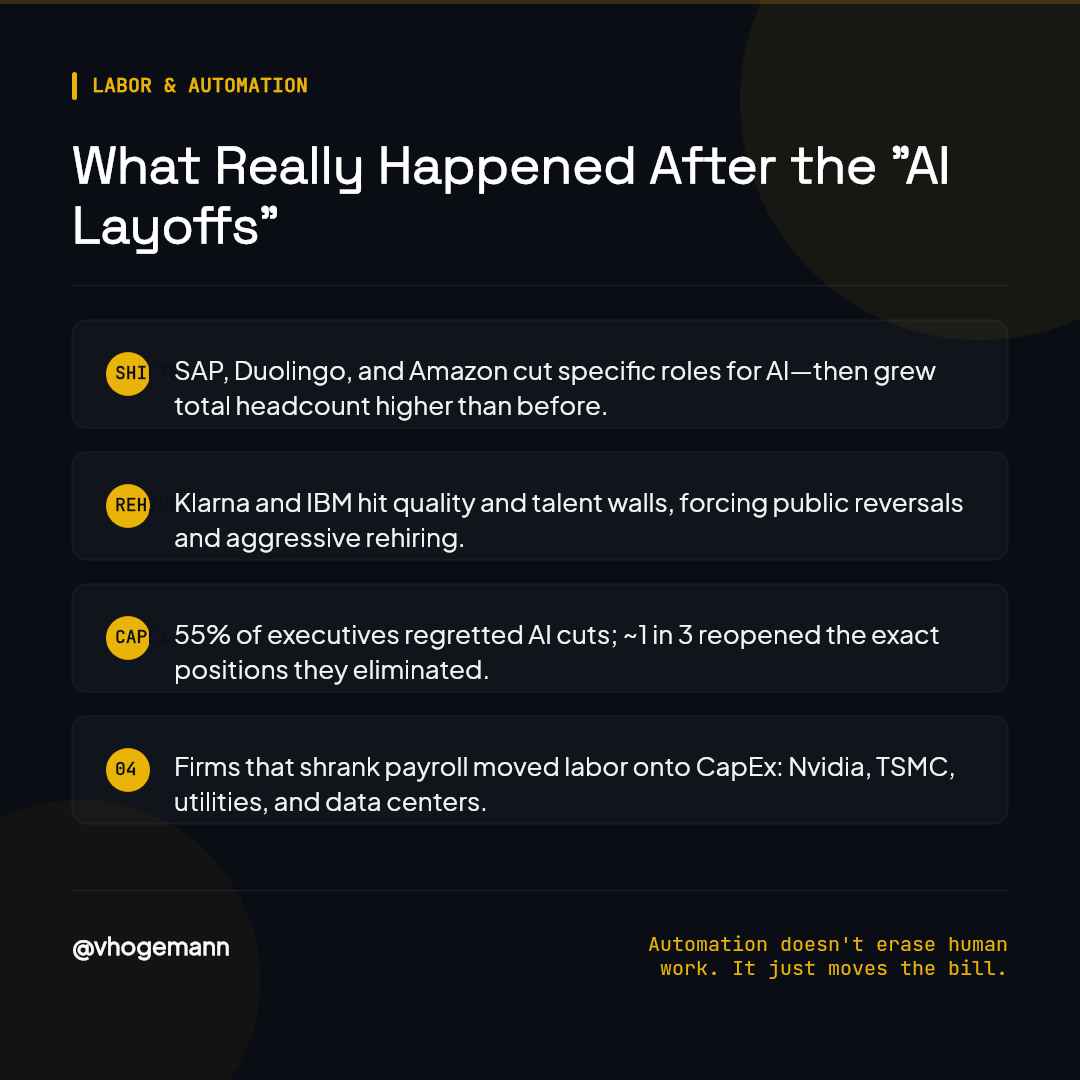
Turns out, the human work didn’t vanish. It just moved around, and many of the biggest posters for AI cuts ended up with more employees than before:
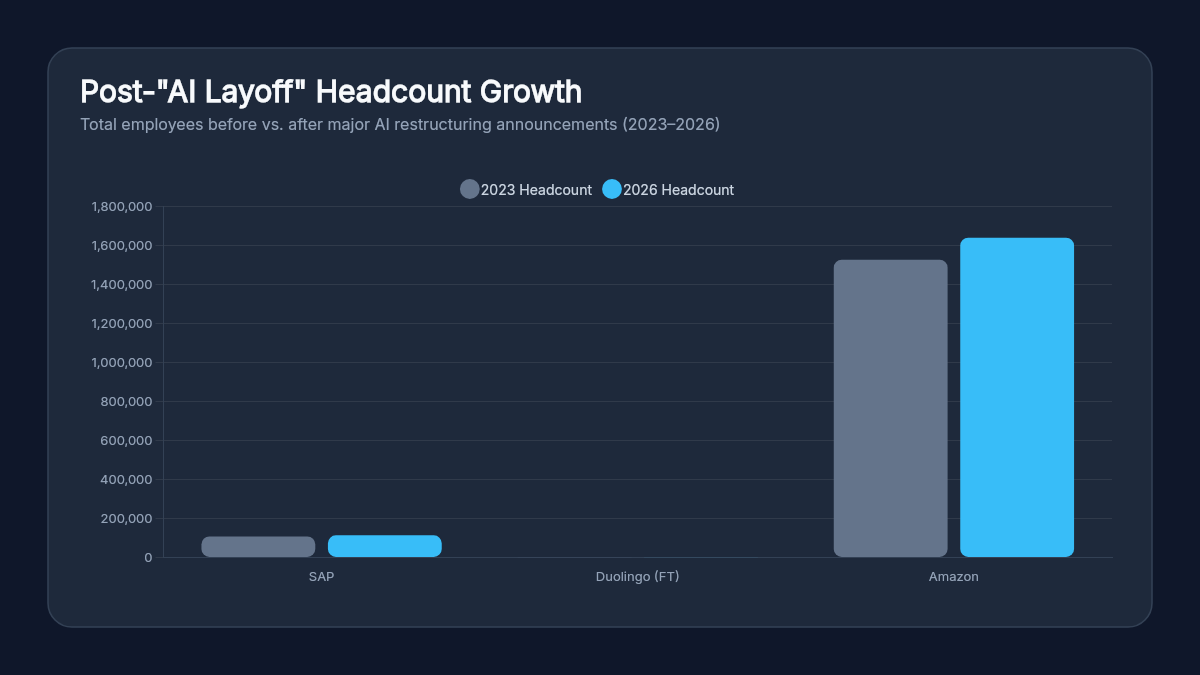
- SAP announced a €3B “AI-first” restructuring affecting ~10,000 roles in 2024. Yet total headcount grew from 107,602 (2023) to over 113,000 by late 2026.
- Duolingo cut 10% of contract translators for AI, then grew full-time staff nearly 50% (720 to ~1,075) to build and validate those pipelines.
- Amazon cut ~30,000 corporate roles citing AI, yet total global headcount rose from 1.52M to 1.63M+ as logistics, warehouse, and data center teams expanded.
The Boomerang Reversals
Even when companies actually tried to shrink, they hit a wall:
- Klarna cut its workforce nearly in half and bragged AI did the work of 700 agents. By 2025/2026, the CEO admitted they went too far as quality tanked, and they started rehiring humans.
- IBM froze junior hiring for AI in 2023, only to reverse course in 2026 and triple entry-level hiring to supervise AI pipelines.
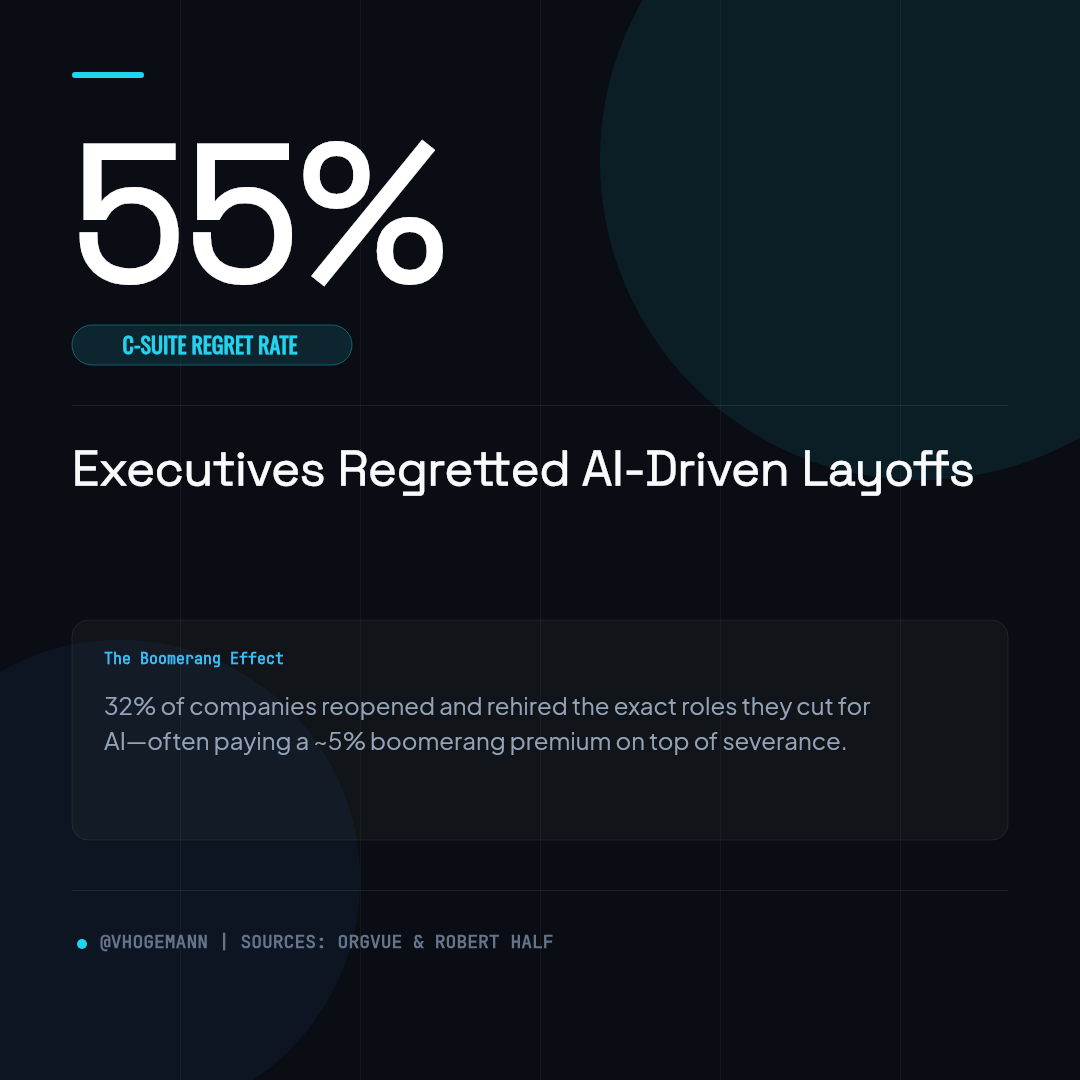
Industry data backs this up: over half of executives who did AI-driven layoffs later regretted it, and roughly 1 in 3 companies ended up reopening the exact roles they cut, often paying a premium to bring people back.
Moving the Bill onto CapEx
And the companies that actually did shrink internal headcount? They didn’t delete the labor. They just moved it onto their CapEx balance sheet, paying Nvidia, TSMC, power utilities, and data center construction crews instead of salaried staff.
Automation doesn’t erase human work. It just moves the bill.