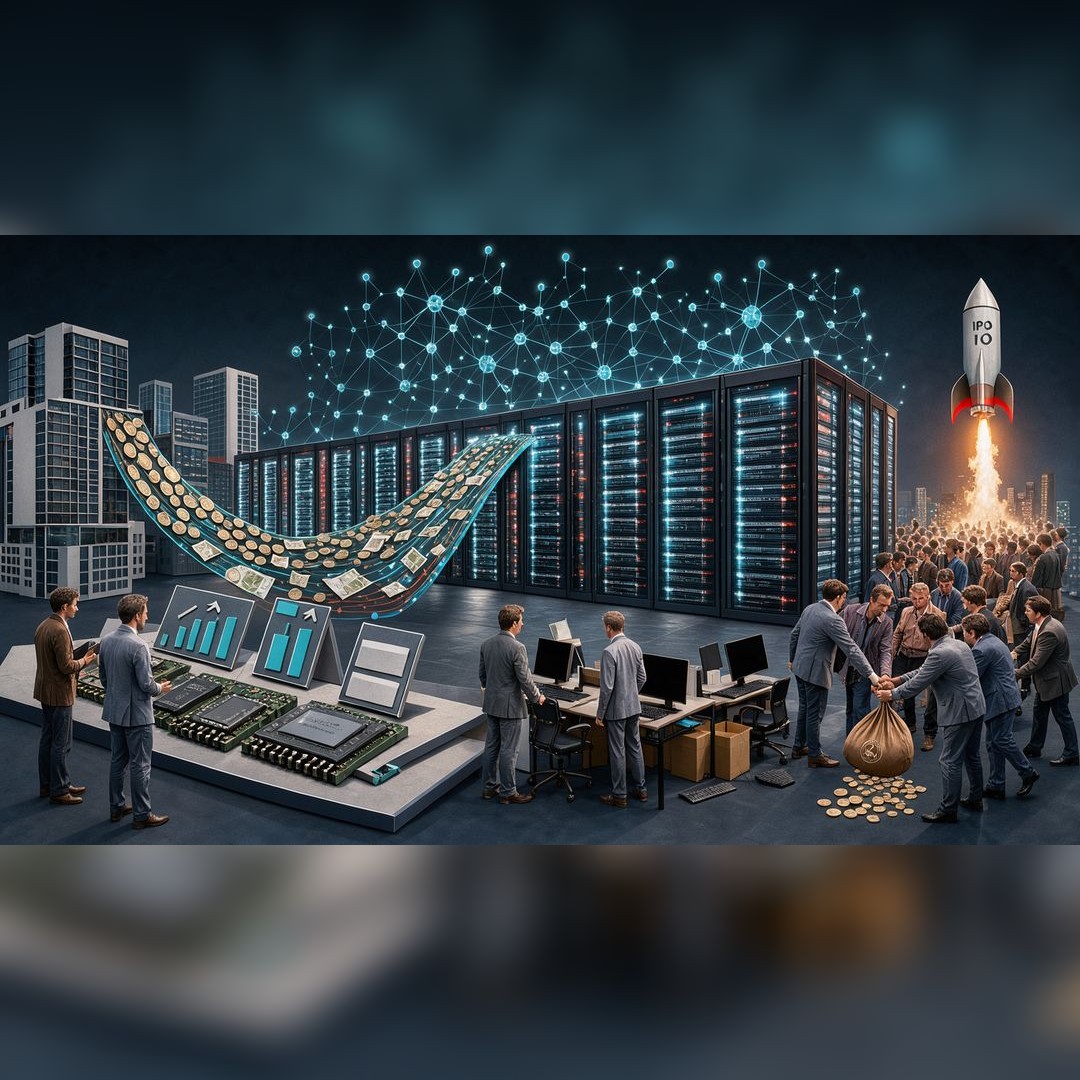
For Anthropic, OpenAI, and the rest of the AI business to ever make money, they have to get paid from somewhere. In the best-case scenario, AI creates new economic value, and a share of that surplus pays back the massive infrastructure investment. In the worst-case scenario, it creates no net new value—it just moves existing money from the companies paying the bills straight into the pockets of AI providers.
So far, the reality leans toward the worst-case scenario:
- No real productivity boom: Studies still show no big jump in overall work output, and the financial return for companies using these tools is messy at best.
- Job losses: The most visible impact hasn’t been a wave of new wealth, but layoffs and entry-level workers struggling to find jobs.
- Higher hardware costs for everyone: Regular consumers are already paying the price. The massive demand for AI chips has driven up silicon prices across the board, making everyday PC parts—especially RAM—much more expensive.
The problem isn’t that the technology doesn’t work. Large language models are undeniably useful for specific tasks like writing code. The problem is that the business model doesn’t pay for itself, so the industry relies on artificially propping up demand and keeping the hype alive.
Instead of being honest about what these tools can actually do, tech leaders are blurring the lines between basic coding helpers and sci-fi breakthroughs. By making hyperbolic promises about solving biology or curing cancer and Parkinson’s disease, they are selling an unmeasurable future just to keep money flowing in—even when LLMs haven’t produced those kinds of breakthroughs in fields like physics.
With major IPOs like SpaceX and Anthropic on the books, the endgame looks pretty clear. Rather than proving a sustainable business model, the plan seems to be passing the financial risk onto the public—leaving regular retail investors and ordinary workers, whose pension and index funds are forced to buy into newly listed mega-cap stocks, holding the bag.