Everyone keeps calling Anthropic’s $81B figure “ARR.”
If you actually read the S-1 filing, it isn’t contracted Annual Recurring Revenue. It’s an instantaneous velocity snapshot built on 4 weeks of metered token burn.
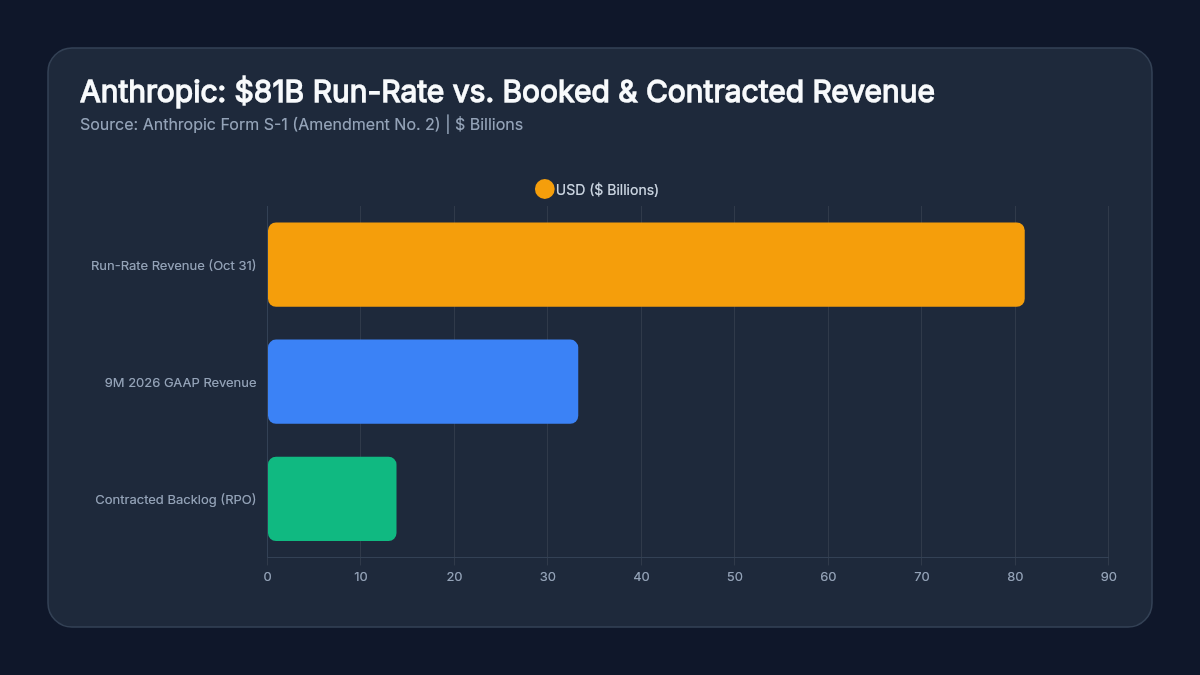
In the S-1, Anthropic defines “Run-Rate Revenue” with a hybrid formula:
(Trailing 28 days of usage fees × 13) + (1 month of subscriptions × 12)
79% of Anthropic’s revenue is pay-as-you-go API and token consumption. One hot October gets multiplied by 13 and treated like a locked-in year.
Run-Rate vs. Booked GAAP Revenue and Backlog
Compare that $81B snapshot to actual booked GAAP revenue in the same filing:
- Q1 2026: $4.73B
- Q2 2026: $11.56B
- Q3 2026: $16.96B
- 9-Month Total: $33.24B
Meanwhile, Remaining Performance Obligations (actual contracted backlog) sat at $13.8B. The rest is uncontracted consumption.
Why Bankers and Headlines Quote the $81B Run Rate
1. Valuation Math
Against its ~$1.5T IPO valuation ($83/share), trailing GAAP revenue makes it look like ~45x sales. Multiplying October’s 28-day sprint by 13 compresses that multiple to ~18.5x.
2. GAAP Bottom-Line Complexity
GAAP bottom-line numbers are a nightmare to explain in a headline. Anthropic posted a $104B GAAP net loss in the first 9 months of 2026 — not from burning cash, but because $94.3B of it was a non-cash accounting penalty triggered by its own rising valuation marking up convertible notes.
3. Industry Muscle Memory
Tech journalism spent 15 years covering B2B SaaS IPOs where “ARR” meant multi-year enterprise lock-in. Calling 28-day metered API burn “ARR” fits neatly into a push alert — even when the compute commitments are locked in for years while the token spend isn’t.